


Updated Date: 07/07/2026
Overview of security policy audit
The security policy audit allows you to evaluate and edit a security policy based on system-provided recommendation. In addition, you can use the audit to analyze policy changes, deploy changes, ignore recommendations, and export the audit results. The image below provides an overview of the information and available actions within the Policy Analyzer audit. For more information about the system-provided recommendations, see section Security Policy Analyzer recommendations.
The policy analyzer audit provides a summary of pending recommendations. Application protection is evaluated based on the severity and number of pending recommendations. As shown in the image below, the analyzed policy has a security score of “C” due to a number of recommendations from various categories. Use the audit to evaluate whether or not to edit your policy based on the system-provided recommendations.
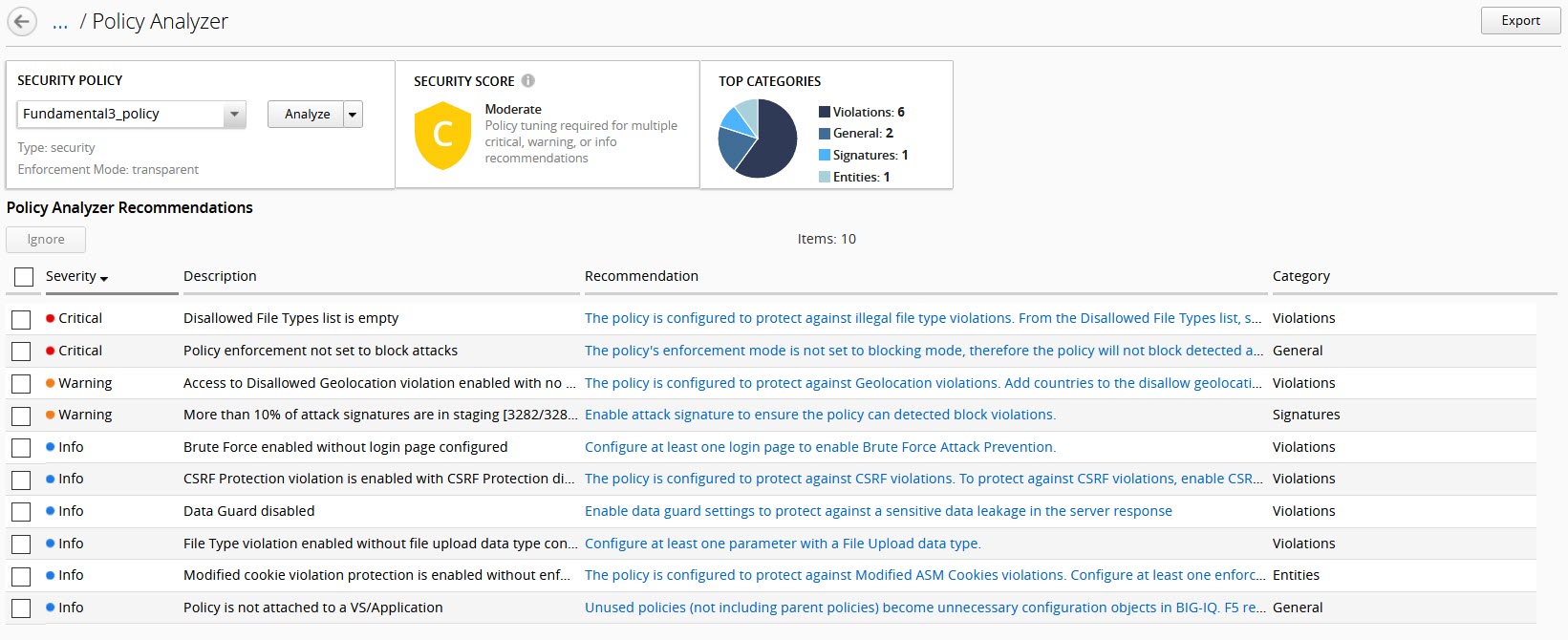
Edit the policy based on the system-provided recommendations. By clicking on the text in the Recommendation column, you can go directly to the configuration area that will allow you to implement policy or system configuration changes.
If the system-provided policy recommendations do not meet your application’s protection requirements, you can select the recommendation’s row and click Ignore. This action can change the system assessment of your overall security score, once you review or re-analyze the policy.
If you have saved changes to the policy, or the objects configured to the policy, you can perform a new audit before you deploy changes. To do so, select the Refresh option from the SECURITY POLICY area in the summary screen. The summary bar and recommendations adjusts the policy analysis according to changes.
If you would like to deploy policy changes, select the Deploy option from the SECURITY POLICY area in the summary screen. This will immediately deploy changes to BIG-IP devices associated with the policy.